It looks like you're outside Russia. Would you like to view this page in English?
Похоже, вы находитесь за пределами России. Переключить страницу на английский язык?
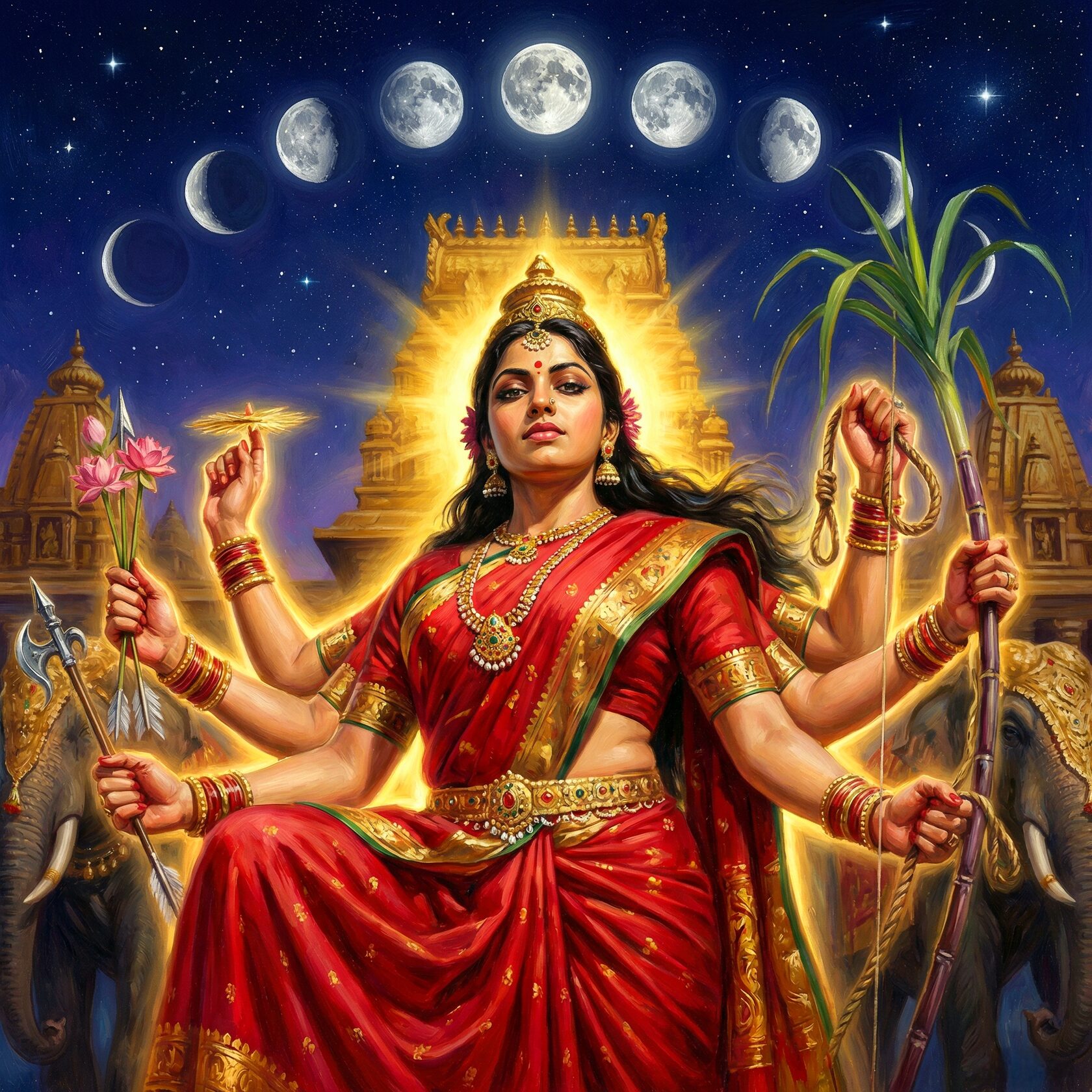
Лалита ТрипурасундариLalita Tripurasundari

Лалита Трипурасундари — Королева КоролевLalita Tripurasundari — the Queen of Queens
Богиня Лалита (санскр. ललिता, IAST lalitā, «Та, кто играет») — тантрическая форма Богини Парвати, объединяющая высшую энергию Шакти и все качества Тридеви (Лакшми, Сарасвати и Кали).
Goddess Lalita (Sanskrit ललिता, IAST lalitā, "She who plays") is the tantric form of Goddess Parvati, uniting the supreme energy of Shakti and all the qualities of the Tridevi (Lakshmi, Saraswati and Kali).
Другие её имена — Шодаши, Трипурасундари и Ади Парашакти. Она носит титул Раджараджешвари — «Королева Королев».
Her other names are Shodashi, Tripurasundari and Adi Parashakti. She bears the title Rajarajeshvari — "the Queen of Queens".
Её благословение дарует семейное благополучие, процветание, защиту от болезней и негативных астрологических периодов.
Her blessing grants family well-being, prosperity, and protection from illness and from unfavourable astrological periods.
Праздники Лалиты: даты для вашего городаLalita festivals: dates for your city
Лалиту почитают в несколько ключевых дней лунного года. Ниже — все основные праздники с датами, рассчитанными астрономически по координатам и часовому поясу вашего города.Lalita is worshipped on several key days of the lunar year. Below are all the main festivals, with dates calculated astronomically for the coordinates and time zone of your city.
| ПраздникFestival | Традиция и календарьTradition and calendar | ДатаDate |
|---|---|---|
| Идёт астрономический расчёт…Astronomical calculation in progress… | ||
Лалита ПанчамиLalita Panchami
ललिता पञ्चमीЛалита Панчами, или Упанга Лалита Врата, приходится на пятый лунный день светлой половины месяца Ашвина — пятый день Шарад Наваратри. Это главный день Лалиты в осеннем цикле: по распространённому преданию, он связан с победой Богини над демоном Бхандасурой, о которой рассказывает Лалитопакхьяна «Брахманда-пураны». Особенно широко праздник отмечают в Гуджарате и Махараштре.
Lalita Panchami, or Upang Lalita Vrat, falls on the fifth lunar day of the bright half of the month of Ashvina — the fifth day of Sharad Navratri. It is Lalita's main day in the autumn cycle: according to a widespread tradition, it is linked with the Goddess's victory over the demon Bhandasura, told in the Lalitopakhyana of the Brahmanda Purana. The festival is especially popular in Gujarat and Maharashtra.
В этот день соблюдают пост, совершают пуджу Лалите Трипурасундари и Шри-янтре, читают «Лалита-сахасранаму» и «Лалита-тришати», подносят красные цветы, кумкум и сладости. Врату держат ради благополучия семьи, счастья, мудрости и защиты от трудностей.
On this day people fast, perform a puja to Lalita Tripurasundari and the Shri Yantra, recite the Lalita Sahasranama and the Lalita Trishati, and offer red flowers, kumkum and sweets. The vrata is kept for family well-being, happiness, wisdom and protection from hardship.
Лалита Джаянти (Шодаши Джаянти)Lalita Jayanti (Shodashi Jayanti)
ललिता जयन्तीЛалита Джаянти — день явления Лалиты Трипурасундари. Чаще всего его отмечают в Магха Пурниму, полнолуние месяца Магха; часть календарей указывает другие дни этого месяца. Согласно Лалитопакхьяне, Богиня явилась из огня жертвенного алтаря сознания — отсюда её имя Чидагни-кунда-самбхута («Рождённая из огненного алтаря сознания»), четвёртое в «Лалита-сахасранаме».
Lalita Jayanti is the day of the appearance of Lalita Tripurasundari. It is most often observed on Magha Purnima, the full moon of the month of Magha; some calendars give other days of this month. According to the Lalitopakhyana, the Goddess arose from the fire-altar of consciousness — hence her name Chidagni-kunda-sambhuta ("Born from the fire-altar of consciousness"), the fourth in the Lalita Sahasranama.
В традиции Шри Видьи это один из важнейших дней года: совершают Навааварана-пуджу Шри-чакре, читают «Лалита-сахасранаму», повторяют Панчадаши-мантру, держат ночное бдение. Полнолуние считается временем, когда полнота Лалиты — 16-я кала Луны — проявляется ярче всего.
In Shri Vidya this is one of the most important days of the year: the Navavarana puja to the Shri Chakra is performed, the Lalita Sahasranama is recited, the Panchadashi mantra is repeated and a night vigil is kept. The full moon is considered the time when Lalita's fullness — the 16th kala of the Moon — shines most brightly.
Лалита СаптамиLalita Saptami
ललिता सप्तमीЛалита Саптами отмечают на седьмой лунный день светлой половины Бхадрапады, накануне Радхаштами. Это день явления Лалиты-сакхи — главной из восьми ближайших подруг Радхи, о которой подробно рассказывает раздел «Связь Лалиты и Кришны».
Lalita Saptami is observed on the seventh lunar day of the bright half of Bhadrapada, the day before Radhashtami. It is the appearance day of Lalita Sakhi — the foremost of Radha's eight closest friends, described in detail in the "Lalita and Krishna" section.
Главные торжества проходят в Унчагаоне рядом с Барсаной, где стоит храм Шри Лалита Сакхи. Для почитателей Лалиты Трипурасундари этот день важен как мост между шакта- и вайшнавской традициями: в богословии обеих Лалита предстаёт проявлением одной Шакти.
The main celebrations take place in Unchagaon near Barsana, home of the Shri Lalita Sakhi temple. For devotees of Lalita Tripurasundari the day is a bridge between the Shakta and Vaishnava traditions: in the theology of both, Lalita appears as a manifestation of one Shakti.
Мантра Богини ЛалитыMantra of Goddess Lalita
Шри Лалита КавачаShri Lalita Kavacha
Это защитная стотра (гимн-броня), обращённая к Богине Лалите Трипурасундари, высшей форме Божественной Матери. Чтение или слушание этой Кавачи считается дарующим защиту, благополучие и духовное освобождение.This is a protective stotra (a hymn-armour) addressed to Goddess Lalita Tripurasundari, the highest form of the Divine Mother. Reciting or listening to this Kavacha is held to grant protection, well-being and spiritual liberation.
vasiṣṭha ṛṣiḥ | anuṣṭup chandaḥ |
śrī lalitā mahātripurasundarī devatā |
sarva kāmanā siddhaye pāṭhe viniyogaḥ ||
वसिष्ठ ऋषिः । अनुष्टुप् छन्दः ।
श्री ललिता महात्रिपुरसुन्दरी देवता ।
सर्व कामना सिद्धये पाठे विनियोगः ॥
ВАСИШТ̣ХА Р̣ШИХ̣ | АНУШТ̣УП ЧХАНДАХ̣ |
Ш́РӢ ЛАЛИТА̄ МАХА̄ТРИПУРАСУНДАРӢ ДЭВАТА̄ |
САРВА КА̄МАНА̄ СИДДХАЙЕ ПА̄Т̣ХЕ ВИНИЙОГАХ̣ ||
hemābhāṃ pītavastrāṃ karakalitalasaddhemapadmāṃ varāṅgīm ||
हेमाभां पीतवस्त्रां करकलितलसद्धेमपद्मां वराङ्गीम् ॥
ХЕМА̄БХА̄М̇ ПӢТАВАСТРА̄М̇ КАРАКАЛИТАЛАСАДДХЕМАПАДМА̄М̇ ВАРА̄Н̇ГӢМ ||
śrī vidyāṃ śāntamūrtiṃ sakala suranutāṃ sarvasampatpradātrīm ||
श्री विद्यां शान्तमूर्तिं सकल सुरनुतां सर्वसम्पत्प्रदात्रीम् ॥
Ш́РӢ ВИДЙА̄М̇ Ш́А̄НТАМӮРТИМ̇ САКАЛА СУРАНУТА̄М̇ САРВАСАМПАТПРАДА̄ТРӢМ ||
tripurā bhrūyugaṃ pātu netre me parameśvarī || 1 ||
त्रिपुरा भ्रूयुगं पातु नेत्रे मे परमेश्वरी ॥ १ ॥
ТРИПУРА̄ БХРӮЙУГАМ̇ ПА̄ТУ НЕТРЕ МЕ ПАРАМЕШ́ВАРӢ || 1 ||
mukhaṃ me tripurāmbā pātu kaṇṭhaṃ pātu maheśvarī || 2 ||
मुखं मे त्रिपुराम्बा पातु कण्ठं पातु महेश्वरी ॥ २ ॥
МУКХАМ̇ МЕ ТРИПУРА̄МБА̄ ПА̄ТУ КАН̣Т̣ХАМ̇ ПА̄ТУ МАХЕШ́ВАРӢ || 2 ||
udaraṃ pāhi yogeśī kaṭī pātu maheśvarī || 3 ||
उदरं पाहि योगेशी कटी पातु महेश्वरी ॥ ३ ॥
УДАРАМ̇ ПА̄ХИ ЙОГЕШ́Ӣ КАТ̣Ӣ ПА̄ТУ МАХЕШ́ВАРӢ || 3 ||
pādau me paramānandadāyinī pātu sarvadā || 4 ||
पादौ मे परमानन्ददायिनी पातु सर्वदा ॥ ४ ॥
ПА̄ДАУ МЕ ПАРАМА̄НАНДАДА̄ЙИНӢ ПА̄ТУ САРВАДА̄ || 4 ||
iti te kathitaṃ devi kavacaṃ bhukti muktidam || 5 ||
इति ते कथितं देवि कवचं भुक्ति मुक्तिदम् ॥ ५ ॥
ИТИ ТЕ КАТХИТАМ̇ ДЕВИ КАВАЧАМ̇ БХУКТИ МУКТИДАМ || 5 ||
labhate vāṃchitaṃ kāmaṃ sarvadā nātra saṃśayaḥ || 6 ||
लभते वांछितं कामं सर्वदा नात्र संशयः ॥ ६ ॥
ЛАБХАТЕ ВА̄М̇ЧХИТАМ̇ КА̄МАМ̇ САРВАДА̄ НА̄ТРА САМ̇Ш́АЙАХ̣ || 6 ||
lalitāyai mahādevyai namaste śubhadāyinī || 7 ||
ललितायै महादेव्यै नमस्ते शुभदायिनी ॥ ७ ॥
ЛАЛИТА̄ЙАИ МАХА̄ДЕВЙАИ НАМАСТЕ Ш́УБХАДА̄ЙИНӢ || 7 ||
15 Нитья Деви — Лучи Лалиты15 Nitya Devis — the rays of Lalita
Луна имеет 16 кал (фаз). 15 из них видимы — каждая соответствует одной титхи (лунному дню). 16-я кала — Садакхья, или Амрита (нектар) — остаётся вечно скрытой и тождественна самой Лалите Трипурасундари. Это неизменное сознание, лежащее в основе всех перемен.The Moon has 16 kalas (phases). Fifteen of them are visible — each corresponds to one tithi (lunar day). The 16th kala — Sadakhya, or Amrita (nectar) — remains forever hidden and is identical with Lalita Tripurasundari herself. It is the unchanging consciousness that underlies all change.
Лалита Трипурасундари — 16-я Кала (Садакхья)Lalita Tripurasundari — the 16th Kala (Sadakhya)
16-я кала — сама Лалита, вечно скрытое чистое сознание. Подобно тому как нектар (амрита) пребывает в Луне всегда, независимо от её видимой фазы, так и Лалита объединяет в себе все 15 Нитья Деви. На Пурниму (Полнолуние) её полнота проявляется наиболее ярко; на Амавасью (Новолуние) — она пребывает в совершенной тишине.The 16th kala is Lalita herself, the eternally hidden pure consciousness. Just as the nectar (amrita) is always present in the Moon, whatever its visible phase, so Lalita unites within herself all 15 Nitya Devis. On Purnima (the full Moon) her fullness is at its brightest; on Amavasya (the new Moon) she abides in perfect silence.
☽ Шукла Пакша — Растущая Луна☽ Shukla Paksha — the waxing Moon
Титхи 1—14 (Пратипада — Чатурдаши) светлой половины лунного месяцаTithis 1–14 (Pratipada – Chaturdashi) of the bright half of the lunar month
Камешвари
कामेश्वरी · Kāmeśvarī · «Владычица Желания»"Lady of Desire"С красным цветом кожи, тремя глазами и шестью руками. Дарует здоровье, богатство и покой ума.Of red complexion, with three eyes and six arms. She grants health, wealth and peace of mind.
Бхагамалини
भगमालिनी · Bhagamālinī · «Гирлянда блаженства»"Garland of bliss"Дарует контроль над привязанностями, помогает укрепить отношения.She grants control over attachments and helps strengthen relationships.
Нитьяклинна
नित्यक्लिन्ना · Nityaklinnā · «Вечно влажная от нектара»"Ever moist with nectar"Дарует сострадание, смягчает сердца, устраняет конфликты.She grants compassion, softens hearts and removes conflicts.
Бхерунда
भेरुण्डा · Bheruṇḍā · «Свирепая»"The fierce one"Свирепая защитница. Разрушает препятствия и защищает от негатива.A fierce protectress. She destroys obstacles and shields from negativity.
Вахнивасини
वह्निवासिनी · Vahnivasinī · «Обитающая в Огне»"She who dwells in fire"Обращение к ней дарует власть над тремя мирами.Calling on her grants dominion over the three worlds.
Маха-Ваджрешвари
महावज्रेश्वरी · Mahāvajreśvarī · «Владычица Ваджры»"Lady of the vajra"Разрушает невежество, устраняет болезни.She destroys ignorance and removes disease.
Шивадути
शिवदूती · Śivadūtī · «Посланница Шивы»"Messenger of Shiva"Та, чьим посланником является сам Шива. Исполняет праведные желания.She whose messenger is Shiva himself. She fulfils righteous desires.
Тварита
त्वरिता · Tvaritā · «Стремительная»"The swift one"Особенная — общая для обеих пакш, украшает корону Деви. Даёт быстрые результаты.A special one — common to both pakshas, she adorns the crown of the Devi. She grants swift results.
Кулассундари
कुलसुन्दरी · Kulasundarī · «Красавица Кулы»"Beauty of the kula"Дарует красоту, очарование и гармонию в семье.She grants beauty, charm and harmony in the family.
Нитья
नित्या · Nityā · «Вечная»"The eternal one"Олицетворение вечности. Дарует покой.The embodiment of eternity. She grants peace.
Нилапатака
नीलपताका · Nīlapatākā · «Синее знамя»"The blue banner"С сапфировым цветом кожи и пятью ликами. Дарует бесстрашие.Of sapphire complexion, with five faces. She grants fearlessness.
Виджайя
विजया · Vijayā · «Победоносная»"The victorious one"Дарует победу и успех.She grants victory and success.
Сарвамангала
सर्वमङ्गला · Sarvamaṅgalā · «Всеблагая»"The all-auspicious one"Делает все действия благоприятными. Защищает в путешествиях.She makes all actions auspicious. She protects while travelling.
Джвала-Малини
ज्वालामालिनी · Jvālāmālinī · «Гирлянда Пламён»"Garland of flames"Окружена кольцом огня. Дарует сиддхи, уничтожает врагов, приносит богатство.Surrounded by a ring of fire. She grants siddhis, destroys enemies and brings wealth.
🌑 Амавасья — Новолуние🌑 Amavasya — the new Moon
На Амавасью (Новолуние) почитается 15-я Нитья — ЧитраOn Amavasya (the new Moon) the 15th Nitya — Chitra — is worshipped
Читра
चित्रा · Citrā · «Многоцветная / Удивительная»"Many-coloured / wondrous"Пятнадцатая Нитья занимает Парамавьому (высшее пространство). С радужным цветом кожи. Дарует духовное самопознание, богатство и силу убеждения. Её почитают на Амавасью — Новолуние, когда видимый лунный свет полностью скрыт, но внутренний свет сознания остаётся.The fifteenth Nitya dwells in Paramavyoma (the highest space). Of rainbow-hued complexion. She grants spiritual self-knowledge, wealth and the power of persuasion. She is worshipped on Amavasya — the new Moon, when the visible moonlight is entirely hidden, yet the inner light of consciousness remains.
☾ Кришна Пакша — Убывающая Луна☾ Krishna Paksha — the waning Moon
Во время Кришна Пакши те же Нитья управляют титхи в обратном порядке — от Джвала-Малини (Пратипада) до Камешвари (Чатурдаши). 8-я Нитья Тварита — общая для обеих пакш. На Пурниму и Амавасью почитается основная форма Лалиты Трипурасундари (16-я Кала) и Читра соответственно.During Krishna Paksha the same Nityas govern the tithis in reverse order — from Jvalamalini (Pratipada) to Kameshvari (Chaturdashi). The 8th Nitya, Tvarita, is common to both pakshas. On Purnima and Amavasya the main form of Lalita Tripurasundari (the 16th Kala) and Chitra are worshipped respectively.
Обращение к Лалите и её 15 вечным формам дарует защиту, мудрость и процветание.Turning to Lalita and her 15 eternal forms grants protection, wisdom and prosperity.
Заказать Пуджу Лалите →Order a Lalita Puja →Связь Трипурасундари, Радхи, Кришны и Лалиты-гопиThe link between Tripurasundari, Radha, Krishna and Lalita-gopi
Единая природа Божественной Матери в свете первичных санскритских источниковThe single nature of the Divine Mother in the light of primary Sanskrit sources
Если 15 Нитья Деви — это лучи Лалиты, преломляющиеся в лунном цикле, то её природа простирается ещё дальше: за пределы тантрического канона, в самое сердце вайшнавской мистики Вриндавана. В шакта-тантрах Бенгалии, в Падма-пуране, в Лалита-сахасранаме с комментарием Бхаскарараи, в санскритской поэзии Лилашуки и в живой литургической традиции храма в Маннаргуди единодушно прослеживается одна и та же удивительная мысль:If the 15 Nitya Devis are the rays of Lalita refracted in the lunar cycle, her nature extends still further: beyond the tantric canon, into the very heart of the Vaishnava mysticism of Vrindavan. In the Shakta tantras of Bengal, in the Padma Purana, in the Lalita Sahasranama with Bhaskararaya's commentary, in the Sanskrit poetry of Lilashuka and in the living liturgical tradition of the temple at Mannargudi, one and the same remarkable idea is traced consistently:
Лалита Махатрипурасундари, восседающая на троне трёх миров, и Лалита-сакхи, ближайшая подруга Радхи во Вриндаване — это проявления одной и той же Шакти, действующей в разных лилах, а сам Кришна есть её мужская форма (puṃ-rūpā kṛṣṇa-vigrahā).Lalita Mahatripurasundari, enthroned above the three worlds, and Lalita Sakhi, Radha's closest friend in Vrindavan, are manifestations of one and the same Shakti, acting in different lilas, and Krishna himself is her masculine form (puṃ-rūpā kṛṣṇa-vigrahā).
Ниже — систематическое исследование с прямыми санскритскими цитатами по первоисточникам, с указанием академических изданий и с честным разграничением того, что верифицировано по критическим текстам, а что относится к живой богословской и литургической традиции.Below is a systematic study with direct Sanskrit quotations from primary sources, with references to academic editions and an honest distinction between what is verified against critical texts and what belongs to living theological and liturgical tradition.
01Ведическая основа: Деви как Высшая РеальностьVedic foundation: the Devi as the Supreme Reality
Самое древнее засвидетельствованное утверждение о Деви как высшей силе, пронизывающей всё сущее — Деви-сукта Ригведы (10.125.1), известная также как «Вак-сукта»:The oldest attested statement of the Devi as the supreme power pervading all that exists is the Devi Sukta of the Rigveda (10.125.1), also known as the «Vak Sukta»:
ahaṃ mitrā-varuṇobhā bibharmy aham indrāgnī aham aśvinobhā ||
अहं मित्रावरुणोभा बिभर्म्यहमिन्द्राग्नी अहमश्विनोभा ॥
АХАМ МИТРА-ВАРУНОБХА БИБХАРМИ АХАМ ИНДРА-АГНИ АХАМ АШВИНОБХА ||
✓ Ригведа 10.125.1 Это древнейшее в индийской литературе самопровозглашение Деви, поющей своё тождество со всеми мужскими божествами — в том числе с Индрой и Агни, которых Она «несёт в Себе». На нём строится вся последующая шактистская теология, утверждающая, что Лалита Махатрипурасундари есть та самая Парашакти, которая несёт в Себе и Вишну, и Кришну.This is the earliest self-proclamation of the Devi in Indian literature, singing her identity with all the male deities — including Indra and Agni, whom She "bears within herself". On it is built the whole subsequent Shakta theology, which holds that Lalita Mahatripurasundari is that very Parashakti who bears within herself both Vishnu and Krishna.
02Падма-пурана 5.75.44–45: Лалита-Деви в мужской форме — это КришнаPadma Purana 5.75.44–45: Lalita Devi in masculine form is Krishna
Самое прямое санскритское свидетельство онтологического тождества Лалиты, Радхики и Кришны содержится в Падма-пуране, Книге 5, главе 75, стихах 44–45. Деви говорит о себе сразу в трёх лицах:The most direct Sanskrit evidence of the ontological identity of Lalita, Radhika and Krishna is found in the Padma Purana, Book 5, chapter 75, verses 44–45. The Devi speaks of herself in three persons at once:
ahaṃ ca vāsudevākhyo nityaṃ kāma-kalātmakaḥ || 44 ||
satyaṃ yoṣit-svarūpo 'haṃ yoṣic cāhaṃ sanātanī |
ahaṃ ca lalitā-devī puṃ-rūpā kṛṣṇa-vigrahā || 45 ||
अहं च वासुदेवाख्यो नित्यं कामकलात्मकः ॥ ४४ ॥
सत्यं योषित्स्वरूपोऽहं योषिच्चाहं सनातनी ।
अहं च ललितादेवी पुंरूपा कृष्णविग्रहा ॥ ४५ ॥
АХАМ ЧА ВАСУДЕВАКХЬО НИТЬЯМ КАМА-КАЛАТМАКАХ ||
САТЬЯМ ЙОШИТ-СВАРУПО 'ХАМ ЙОШИЧ ЧАХАМ САНАТАНИ |
АХАМ ЧА ЛАЛИТА-ДЕВИ ПУМ-РУПА КРИШНА-ВИГРАХА ||
✓ Падма-пурана 5.75.44–45 В одном стихе Деви называет себя сразу Лалитой, Радхикой, Васудевой (Кришной) и Кāмакалой — фундаментальной татвой Шри Видьи. Этот стих составляет теологическое ядро Радха-тантры (бенгальский шакта-текст в 37 главах, критическое издание: Mans Broo, Rādhā Tantra, Routledge, 2017): в её сюжете Тришурасундари является Вишну во время его аскезы и велит ему воплотиться в Матхуре как Кришне, а ей самой — как Радхе, чтобы вместе совершить каула-садхану.In a single verse the Devi calls herself at once Lalita, Radhika, Vasudeva (Krishna) and Kamakala — the fundamental tattva of Shri Vidya. This verse forms the theological core of the Radha Tantra (a Bengali Shakta text in 37 chapters; critical edition: Mans Broo, Rādhā Tantra, Routledge, 2017): in its narrative Trishurasundari appears to Vishnu during his austerity and commands him to incarnate in Mathura as Krishna, and herself as Radha, so that together they may perform kaula sadhana. ○ Broo 2017; Manring 2019
Параллельные тантрические свидетельства того же воззрения — Гухьятигухья-тантра и Тодала-тантра, связывающие десять Махавидий с десятью аватарами Вишну: Кришна соотносится с Кали, Радха — с Трипурасундари.Parallel tantric testimonies to the same view are the Guhyatiguhya Tantra and the Todala Tantra, which link the ten Mahavidyas with the ten avatars of Vishnu: Krishna is correlated with Kali, Radha with Tripurasundari. ○ Тодала-тантра, гл. 1; Avalon, Hymns to the Goddess
03Падма-пурана, гл. 74: Арджуна-гопи и владычество Трипурасундари над ВриндаваномPadma Purana, ch. 74: Arjuna-gopi and the sovereignty of Tripurasundari over Vrindavan
В Падма-пуране, Патала-кханде, главе 74 (англ. перевод: N. A. Deshpande, The Padma Purāṇa, Motilal Banarsidass, 1988–1992) изложен один из самых удивительных эпизодов вайшнавской литературы. Арджуна просит Кришну дать ему возможность увидеть Раса-лилу, и Кришна отвечает прямо:In the Padma Purana, Patala Khanda, chapter 74 (English translation: N. A. Deshpande, The Padma Purāṇa, Motilal Banarsidass, 1988–1992) is told one of the most remarkable episodes of Vaishnava literature. Arjuna asks Krishna to grant him the ability to witness the Rasa-lila, and Krishna answers plainly:
«Без неё [Шри Трипурасундари] я никогда не смогу дать тебе это положение. Поклоняйся, с великой преданностью, славной богине Трипурасундари — в ком всё возникло, в ком всё пребывает и в ком всё исчезнет»."Without her [Shri Tripurasundari] I can never grant you this position. Worship, with great devotion, the glorious goddess Tripurasundari — in whom all has arisen, in whom all abides and in whom all will dissolve."
✓ Падма-пурана, Патала-кханда, гл. 74, ст. 13–29 (пер. Deshpande, 1988–1992)
Арджуна совершает поклонение Деви, окружённой её шакти Бāла-видьи, преображается в гопи Арджуни и видит Вриндавану выше Голоки. В перечне подруг-сакхи, окружающих Арджуни-гопи во вриндаванской лиле (стт. 104b–121), прямо названы — среди прочих — Lalitā, Lalita-yauvanā, Kāma-kalā и Madana-mañjarī.Arjuna performs worship of the Devi, surrounded by her shakti Bala-vidya, is transformed into the gopi Arjuni and sees Vrindavana above Goloka. In the list of sakhi friends surrounding Arjuni-gopi in the Vrindavan lila (vv. 104b–121), there are named — among others — Lalitā, Lalita-yauvanā, Kāma-kalā and Madana-mañjarī. ✓ Падма-пурана Патала-кханда 74.115–117
Важное уточнение: в самом тексте пураны имя Lalitā в этом перечне относится к одной из подруг-гопи вриндаванской лилы, а не прямо отождествлено с Шри Трипурасундари. Само отождествление Лалиты-гопи и Лалиты Трипурасундари принадлежит уже последующей богословской традиции (см. разделы 4 и 9 ниже), опирающейся на стихи 5.75.44–45 той же пураны и на корпус шакта-тантр. Сама же глава 74 говорит лишь о том, что доступ к Раса-лиле Кришны обретается через поклонение Трипурасундари, и что Лалита присутствует среди гопи Вриндавана.An important clarification: in the purana text itself the name Lalitā in this list refers to one of the gopi friends of the Vrindavan lila, and is not directly identified with Shri Tripurasundari. The identification of Lalita-gopi with Lalita Tripurasundari belongs to the later theological tradition (see sections 4 and 9 below), drawing on verses 5.75.44–45 of the same purana and on the corpus of Shakta tantras. Chapter 74 itself says only that access to Krishna's Rasa-lila is obtained through the worship of Tripurasundari, and that Lalita is present among the gopis of Vrindavan.
04Лалита-сахасранама: имена, тождественные Вишну и КришнеLalita Sahasranama: names identical with Vishnu and Krishna
«Тысяча имён Лалиты» — часть Лалитопакхьяны Брахманда-пураны (Уттара-кханда). Авторитетное критическое издание с классическим комментарием Бхаскарараи Макхина (XVIII в., Saubhāgya-bhāskara) выпустил R. Ananthakrishna Sastry (Adyar Library, 1925; переиздания Motilal Banarsidass). Современный детальный комментарий — V. Ravi.The "Thousand Names of Lalita" is part of the Lalitopakhyana of the Brahmanda Purana (Uttara Khanda). An authoritative critical edition with the classical commentary of Bhaskararaya Makhin (18th c., Saubhāgya-bhāskara) was published by R. Ananthakrishna Sastry (Adyar Library, 1925; reprints Motilal Banarsidass). A modern detailed commentary is by V. Ravi.
В гимне присутствует серия имён, прямо отождествляющих Лалиту с Вишну и Кришной. Нумерация — по стандартному изданию Бхаскарараи:The hymn contains a series of names that directly identify Lalita with Vishnu and Krishna. The numbering follows the standard Bhaskararaya edition:
«Имеющая форму Говинды (Кришны)». Бхаскарарая в Saubhāgya-bhāskara объясняет: «Говинда — это Вишну как защитник вселенной; здоровье, благосостояние и процветание обретаются через эту её ипостась». Имя стоит непосредственно после Goptrī (266, «Защитница»)."Having the form of Govinda (Krishna)". Bhaskararaya in the Saubhāgya-bhāskara explains: "Govinda is Vishnu as the protector of the universe; health, well-being and prosperity are obtained through this aspect of her." The name stands immediately after Goptrī (266, "Protectress").
«Сестра Падманабхи (Вишну)» — устанавливает родственно-онтологическое единство Деви и Вишну, отсылая к традиции Канья-кумари как сестры Кришны."Sister of Padmanabha (Vishnu)" — establishes the kindred-ontological unity of the Devi and Vishnu, referring to the tradition of Kanya-kumari as the sister of Krishna.
«Иллюзорно-творческая энергия Вишну». В контексте Вриндавана эта энергия известна как Йогамайя — координатор Раса-лилы; её земное проявление среди подруг Радхи — Лалита-сакхи."The illusory-creative energy of Vishnu". In the Vrindavan context this energy is known as Yogamaya — the coordinator of the Rasa-lila; its earthly manifestation among Radha's friends is Lalita Sakhi.
«Та, чья форма — Вишну». Прямое утверждение онтологического тождества; стоит рядом с именем Vaiṣṇavī (892, «сила Вишну»)."She whose form is Vishnu". A direct assertion of ontological identity; it stands next to the name Vaiṣṇavī (892, "the power of Vishnu").
✓ Верифицировано Имена и их позиции в гимне сверены с санскритским текстом ЛСН (sanskritdocuments.org) и комментарием Бхаскарараи в издании R. Ananthakrishna Sastry (Adyar, 1925), а также с современным комментарием V. Ravi (шлока 266–267).The names and their positions in the hymn were checked against the Sanskrit text of the LSN (sanskritdocuments.org) and Bhaskararaya's commentary in the edition of R. Ananthakrishna Sastry (Adyar, 1925), as well as against the modern commentary of V. Ravi (shloka 266–267).
Почитание Лалиты Трипурасундари — это одновременно и почитание самого Кришны в Его женской ипостаси. Закажите Пуджу, чтобы получить благословение Деви-Матери в любой Её форме.Worship of Lalita Tripurasundari is at the same time worship of Krishna himself in His feminine aspect. Order a Puja to receive the blessing of the Devi-Mother in any of Her forms.
Заказать Пуджу Лалите →Order a Lalita Puja →05Кришна-карнамритам III.18: Кришна как ГопаласундариKrishna-karnamritam III.18: Krishna as Gopalasundari
Кришна-карнамритам — санскритская поэма XIII в., созданная Лилашукой (Бильвамангала Тхакура) из Кералы и признанная всеми вайшнавскими сампрадаями. В третьей части (tṛtīyāśvāsa), шлока 18, Лилашука прямо обращается к Кришне в женской форме — как к Лакшми пастушьего клана, что в комментаторской традиции отождествляется с Гопаласундари:Krishna-karnamritam is a 13th-century Sanskrit poem composed by Lilashuka (Bilvamangala Thakura) of Kerala and accepted by all Vaishnava sampradayas. In the third part (tṛtīyāśvāsa), shloka 18, Lilashuka addresses Krishna directly in feminine form — as the Lakshmi of the cowherd clan, which the commentarial tradition identifies with Gopalasundari:
bhūṣā-padāropita-puṇya-barhām |
kāruṇya-dhārāḷa-kaṭākṣa-mālāṃ
bālāṃ bhaje vallava-vaṃśa-lakṣmīm || 18 ||
भूषापदारोपितपुण्यबर्हाम् ।
कारुण्यधाराळकटाक्षमालां
बालां भजे वल्लववंशलक्ष्मीम् ॥ १८ ॥
БХУША-ПАДА-АРОПИТА-ПУНЬЯ-БАРХАМ |
КАРУНЬЯ-ДХАРАЛА-КАТАКША-МАЛАМ |
БАЛАМ БХАДЖЕ ВАЛЛАВА-ВАМША-ЛАКШМИМ ||
✓ Первичный санскритский источник Грамматический женский род применительно к Кришне (bālām, vaṃśa-lakṣmīm) — прямое лингвистическое свидетельство объединённой формы. Комментарий издания Ahobilavalli (под ред. Oppiliappan Koil Sri V. Sathakopan, корректура санскритского текста: Mannargudi Sri Srinivasan Narayanan) явно разъясняет: «Here Leelasuka describes KrishNa as Gopāla-sundari or as the Śrī of the Yādavas. This form of Gopāla-sundari as the upāsanā-mūrti is described again in some slokas later on». То есть само авторитетное шри-вайшнавское издание называет это упасанā-мūрти — Гопаласундари.The grammatical feminine gender applied to Krishna (bālām, vaṃśa-lakṣmīm) is direct linguistic evidence of the combined form. The commentary of the Ahobilavalli edition (ed. Oppiliappan Koil Sri V. Sathakopan; Sanskrit text collation: Mannargudi Sri Srinivasan Narayanan) states plainly: "Here Leelasuka describes KrishNa as Gopāla-sundari or as the Śrī of the Yādavas. This form of Gopāla-sundari as the upāsanā-mūrti is described again in some slokas later on". Thus the authoritative Sri Vaishnava edition itself calls this form an upasana-murti — Gopalasundari.
Сходное обращение к Кришне как несравненному источнику красоты, недостижимой для других богов, Лилашука повторяет неоднократно; так, шлока III.17 говорит о его «нектарной улыбке на алых губах» и «глазах как длинные лепестки молодого лотоса» — те же атрибуты, которыми Лалита-сахасранама описывает Деви.Similar addresses to Krishna as an incomparable source of beauty, unattainable by other gods, are repeated by Lilashuka several times; thus shloka III.17 speaks of his "nectar smile on crimson lips" and "eyes like long petals of a young lotus" — the very attributes with which the Lalita Sahasranama describes the Devi. ✓ Кришна-карнамритам III.17
06Гопаласундари и Шри Видья Раджагопала: тантрическая теология единстваGopalasundari and Shri Vidya Rajagopala: the tantric theology of unity
В тантрической традиции Шри Видьи и в Панчаратра-агаме Лалита и Кришна объединяются в единое божество Гопаласундари — Ардханаришвара-сваруппу, чьё тело наполовину тёмно-синее (Кришна), наполовину красное (Лалита). Её почитают с помощью особой 33-биджной мантры — синтеза 15-сложной Панчадаши-мантры Лалиты и 18-сложной Шри Раджагопала-аштадашакшари-мантры. Соответствующие материалы содержатся в трактатах Puraścaryārṇava Tantra, Meru Tantra, Śrīvidyārṇava Tantra, Mantra Mahodadhi, а также в самостоятельном руководстве Krama-Dīpikā Кешавы Ачарьи (X–XI вв., Кашмир), посвящённом почитанию Гопала-Сундари.In the tantric tradition of Shri Vidya and in the Pancharatra agama, Lalita and Krishna are united in a single deity, Gopalasundari — an Ardhanarishvara-svarupa whose body is half dark-blue (Krishna) and half red (Lalita). She is worshipped with a special 33-bija mantra — a synthesis of Lalita's 15-syllable Panchadashi mantra and the 18-syllable Shri Rajagopala-ashtadashakshari mantra. The relevant material is found in the treatises Puraścaryārṇava Tantra, Meru Tantra, Śrīvidyārṇava Tantra, Mantra Mahodadhi, and also in the separate manual Krama-Dīpikā of Keshava Acharya (10th–11th c., Kashmir), devoted to the worship of Gopala-Sundari. ◇ Тантрические руководства Шри Видьи
Основная биджа-мантра, связанная с янтрой Видья-Раджагопалы:The principal bija mantra associated with the yantra of Vidya-Rajagopala:
В тантрической иконографии Гопаласундари описывается как восьмирукая Мадана-Гопаласундари: она держит одновременно атрибуты Кришны (флейту, диск, лотос, раковину) и атрибуты Лалиты (сахарный лук — ikṣu-cāpa, цветочные стрелы — puṣpa-bāṇa, петлю — pāśa и стрекало — aṅkuśa) и сияет цветом восходящего солнца (aruṇa-varṇa), характерным для Трипурасундари.In tantric iconography Gopalasundari is described as the eight-armed Madana-Gopalasundari: she holds at once the attributes of Krishna (the flute, discus, lotus, conch) and the attributes of Lalita (the sugarcane bow — ikṣu-cāpa, the flower arrows — puṣpa-bāṇa, the noose — pāśa and the goad — aṅkuśa) and shines with the colour of the rising sun (aruṇa-varṇa), characteristic of Tripurasundari.
◇ Иконография в храмовой и сампрадаической традиции Полные санскритские дхьяна-шлоки Мадана-Гопаласундари сохраняются в храмовых руководствах и линиях ученической передачи Шри Видьи; их публикация в академических критических изданиях остаётся за пределами открытого корпуса.The complete Sanskrit dhyana shlokas of Madana-Gopalasundari are preserved in temple manuals and lines of Shri Vidya transmission; their publication in academic critical editions remains outside the open corpus.
07Храм Шри Видья Раджагопаласвами в МаннаргудиThe Shri Vidya Rajagopalaswamy temple at Mannargudi
Самое сильное историческое и литургическое свидетельство объединённой формы — храм Sri Vidhya Rajagopalaswamy в Маннаргуди (округ Тируварур, Тамил-Наду). Основан Кулоттунгой Чола I (X в.), расширен последующими Чола (Раджараджа III, Раджендра III), Танджавурскими Наяками (XVI в., прежде всего Виджаярагхава Наяк, 1532–1575) и Маратхами. Площадь храма — 9,3 га; 16 гопурамов, главный раджагопурам — 59 м; храмовый пруд Харидра-Нади — один из крупнейших в Индии. Храм считается одним из 108 Абхимана-кшетрам вайшнавской традиции и носит литургическое название Дакшина-Двараки («Южной Двараки»).The strongest historical and liturgical evidence of the combined form is the Sri Vidhya Rajagopalaswamy temple at Mannargudi (Tiruvarur district, Tamil Nadu). Founded by Kulottunga Chola I (10th c.), enlarged by later Cholas (Rajaraja III, Rajendra III), the Thanjavur Nayaks (16th c., above all Vijayaraghava Nayak, 1532–1575) and the Marathas. The temple area is 9.3 ha; there are 16 gopurams, the main rajagopuram being 59 m; the temple tank Haridra-Nadi is one of the largest in India. The temple is counted among the 108 Abhimana-kshetras of the Vaishnava tradition and bears the liturgical name Dakshina-Dvaraka ("the southern Dvaraka"). ✓ Wikipedia; M. Rajagopalan, 15 Vaishnava Temples of Tamil Nadu, 1993
Особенность храма зашита в самом имени божества: главный мурти именуется Шри Видья Раджагопаласвами, что напрямую отсылает к Шри Видье — традиции почитания Лалиты Трипурасундари. В литургической традиции храма утверждается, что Раджагопаласвами стоит на Шри Чакре — янтре Лалиты Трипурасундари — и наряду с раковиной и диском держит атрибуты Раджа-Раджешвари: сахарный лук, цветочные стрелы, петлю и стрекало. Во время Брахмотсавама мурти украшается в форме Мадана-Гопаласундари.The peculiarity of the temple is embedded in the very name of the deity: the main murti is called Shri Vidya Rajagopalaswami, which points directly to Shri Vidya — the tradition of worshipping Lalita Tripurasundari. The temple's liturgical tradition holds that Rajagopalaswami stands upon the Shri Chakra — the yantra of Lalita Tripurasundari — and, along with the conch and discus, holds the attributes of Raja-Rajeshvari: the sugarcane bow, flower arrows, noose and goad. During the Brahmostavam the murti is adorned in the form of Madana-Gopalasundari. ◇ Литургическая традиция храма; материалы сампрадайи Шри Видья
Композитор XVIII в. Муттушвами Дикшитар (1775–1835), один из «тримурти» карнатакской музыки, посвятил Шри Видье Раджагопале в Маннаргуди классическую крити, признанную в южноиндийской традиции. Полное официальное название храма — Arulmigu Sri Vidhya Rajagopalaswamy Temple, Mannargudi.The 18th-century composer Muttuswami Dikshitar (1775–1835), one of the "trimurti" of Carnatic music, dedicated a classical kriti, recognised in the South Indian tradition, to Shri Vidya Rajagopala at Mannargudi. The full official name of the temple is Arulmigu Sri Vidhya Rajagopalaswamy Temple, Mannargudi.
08Гуруваюпурешвара-аштоттара: литургический санскритский гимн ГопаласундариGuruvayupureshvara-ashtottara: a liturgical Sanskrit hymn to Gopalasundari
Аутентичное литургическое свидетельство объединённой формы содержится в «Шри Гуруваюпурешвара-аштоттара-шатанама-стотра-ратнам» — 108-имённом гимне Гуруваюпурам (Гуруваюр, Керала), составленном с благословения Шримад Андаван из Шрирангама.An authentic liturgical testimony of the combined form is contained in the "Shri Guruvayupureshvara-ashtottara-shatanama-stotra-ratnam" — a 108-name hymn of Guruvayupura (Guruvayur, Kerala), composed with the blessing of Srimad Andavan of Srirangam.
В этом каноническом гимне Кришна Гуруваюпура прямо называется как гопāласундара-сварӯпа и наделяется именами, объединяющими его с биджа-мантрами и теологическими принципами Лалиты:In this canonical hymn Krishna of Guruvayupura is directly called gopāla-sundara-svarūpa and is given names that unite him with the bija mantras and theological principles of Lalita:
māra-bīja-samāyukto vāṇī-bīja-samanvitaḥ ||
मारबीजसमायुक्तो वाणीबीजसमन्वितः ॥
МА̄РА-БӢДЖА-САМА̄ЙУКТО ВА̄Н̣Ӣ-БӢДЖА-САМАНВИТАХ̣ ||
Здесь перечисляются именно те четыре биджи (aiṃ hrīṃ klīṃ śrīṃ), которые составляют основу мантры Лалиты Трипурасундари — и они прямо применяются к Кришне Гуруваюпурам. Гимн далее называет его именами:Here are listed precisely those four bijas (aiṃ hrīṃ klīṃ śrīṃ) that form the foundation of the mantra of Lalita Tripurasundari — and they are applied directly to Krishna of Guruvayupura. The hymn further calls him by the names:
...
dvādaśāvarati-cakra-vṛnda-gopāla-bījāḍhyaḥ sarva-mohana-cakra-gaḥ ||
...
kīrti-kānti-dhana-ārogya-rakṣā-śrī-vijaya-pradaḥ ||
...
द्वादशावरतिचक्रवृन्दगोपालबीजाढ्यः सर्वमोहनचक्रगः ॥ २६ ॥
...
कीर्तिकान्तिधनारोग्यरक्षाश्रीविजयप्रदः ॥ ३५ ॥
...
ДВА̄ДАШ́А̄ВАРАТИ-ЧАКРА-ВР̣НДА-ГОПА̄ЛА-БӢДЖА̄Д̣ХЙАХ̣ САРВА-МОХАНА-ЧАКРА-ГАХ̣ ||
...
КӢРТИ-КА̄НТИ-ДХАНА-А̄РОГЙА-РАКШ́А̄-Ш́РӢ-ВИДЖАЙА-ПРАДАХ̣ ||
✓ Гуруваюпурешвара-аштоттара Все технические термины здесь — это термины Шри Видьи: Kāma-rāja-kūṭa — вторая кūта Панчадаши-мантры; Sarva-mohana-cakra — один из аваран Шри Чакры; kīrti-kānti-dhana-ārogya-rakṣā-śrī-vijaya — стандартные плоды поклонения Лалите. Таким образом, центральный шри-вайшнавский храм Кералы официально прославляет Кришну в категориях Шри Видьи как объединённую форму Гопаласундари.All the technical terms here are terms of Shri Vidya: Kāma-rāja-kūṭa is the second kūṭa of the Panchadashi mantra; Sarva-mohana-cakra is one of the avaranas of the Shri Chakra; kīrti-kānti-dhana-ārogya-rakṣā-śrī-vijaya are the standard fruits of Lalita worship. Thus the central Sri Vaishnava temple of Kerala officially glorifies Krishna in the categories of Shri Vidya as the combined form Gopalasundari.
09Лалита-сакхи в традиции Гаудия-вайшнавизмаLalita Sakhi in the Gaudiya Vaishnava tradition
Лалита-сакхи (Лалита-гопи) — главная из восьми ближайших подруг Радхи (aṣṭa-sakhī). Её родина — Унчагаон рядом с Барсаной; духовная обитель — Голока. Главный храм, посвящённый лично ей, — Шри Лалита Сакхи Мандир в Унчагаоне. Также ей посвящены приделы в Шри Радха-Мадан-Мохан-мандире (Вриндавана) и в Ашта-сакхи-мандире (Барсана). Главные праздники: Лалита-саптами (Бхадрапада), Латхмар-Холи, Шарад-пурнима, Картик-пурнима.Lalita Sakhi (Lalita-gopi) is the foremost of Radha's eight closest friends (aṣṭa-sakhī). Her birthplace is Unchagaon near Barsana; her spiritual abode is Goloka. The main temple dedicated to her personally is the Shri Lalita Sakhi Mandir at Unchagaon. Chapels are also dedicated to her in the Shri Radha-Madan-Mohan temple (Vrindavan) and in the Ashta-sakhi temple (Barsana). Her principal festivals are Lalita Saptami (Bhadrapada), Lathmar Holi, Sharad Purnima and Kartik Purnima.
В каноническом гимне «Шри Лалита-аштакам», написанном Рупой Госвами (XVI в.), она прославляется как защитница Божественной Четы, готовая «удалить даже каплю пота со стоп Радхи и Кришны».In the canonical hymn "Shri Lalita-ashtakam", written by Rupa Gosvami (16th c.), she is glorified as the protectress of the Divine Couple, ready "to remove even a drop of sweat from the feet of Radha and Krishna". ✓ Рупа Госвами, Lalitāṣṭakam
Джива Госвами в «Бхагават-сандарбхе» и «Прити-сандарбхе» развивает учение о хладини-шакти (энергии Блаженства) как высшем аспекте сварупа-шакти, сгущающемся в Радху, чьи ближайшие распространения — это восемь сакхи, среди которых Лалита занимает первое место. В шакта-интерпретации те же восемь сакхи отождествляются с восемью сиддхи (aṇimā, mahimā, garimā, laghimā, prāpti, prākāmya, īśitva, vaśitva).Jiva Gosvami, in the "Bhagavata-sandarbha" and "Priti-sandarbha", develops the doctrine of hladini-shakti (the energy of Bliss) as the highest aspect of svarupa-shakti, condensing into Radha, whose closest expansions are the eight sakhis, among whom Lalita holds the first place. In Shakta interpretation the same eight sakhis are identified with the eight siddhis (aṇimā, mahimā, garimā, laghimā, prāpti, prākāmya, īśitva, vaśitva). ◇ Гаудия-сандарбхи; шакта-богословская традиция
В «Садхана-дипике» Радхакришнадасы Госвами (санскритский текст в корпусе GRETIL) встречается прямая формула «iyam eva lalitaiva rādhikā» — «именно она [та же самая Хладини] — Лалита, и она же Радхика».In the "Sadhana-dipika" of Radhakrishnadasa Gosvami (Sanskrit text in the GRETIL corpus) there occurs the direct formula "iyam eva lalitaiva rādhikā" — "she herself [that same Hladini] is Lalita, and she is Radhika". ✓ Sādhanā-dīpikā (GRETIL)
Таким образом, и в шакта-тантрической, и в вишнуитской традиции прослеживается одна и та же мысль: единая высшая Шакти (Хладини / Махамайя / Трипурасундари) проявляется как Радха в её центральном аспекте и как Лалита-сакхи в её ближайшем расширении.Thus, both in the Shakta-tantric and in the Vaishnava tradition the same idea is traced: the single supreme Shakti (Hladini / Mahamaya / Tripurasundari) manifests as Radha in her central aspect and as Lalita Sakhi in her closest expansion.
10Синтез: единое тождество в четырёх плоскостяхSynthesis: a single identity on four planes
Сводя вместе верифицированные свидетельства, мы видим четыре согласующиеся плоскости:Bringing together the verified testimonies, we see four concordant planes:
Тантрическая (Шри Видья и шакта-тантры): Лалита Махатрипурасундари принимает мужскую форму как Кришна. Прямое санскритское основание — Падма-пурана 5.75.45 (ahaṃ ca lalitā-devī puṃ-rūpā kṛṣṇa-vigrahā) и теология Радха-тантры. Тодала- и Гухьятигухья-тантры связывают Кришну с Кали, а Радху — с Трипурасундари.Tantric (Shri Vidya and the Shakta tantras): Lalita Mahatripurasundari takes a masculine form as Krishna. The direct Sanskrit basis is Padma Purana 5.75.45 (ahaṃ ca lalitā-devī puṃ-rūpā kṛṣṇa-vigrahā) and the theology of the Radha Tantra. The Todala and Guhyatiguhya tantras link Krishna with Kali and Radha with Tripurasundari.
Пураническая: Лалита-сахасранама прямо называет Деви именами Govinda-rūpiṇī (267), Padmanābha-sahodarī (280), Viṣṇu-māyā (75), Vaiṣṇavī (892), Viṣṇu-rūpiṇī (893). Падма-пурана, Патала-кханда, гл. 74 показывает через эпизод Арджуны-гопи, что доступ к Раса-лиле Вриндавана обретается через поклонение Шри Трипурасундари, и среди гопи-сакхи, окружающих Арджуни-гопи, прямо названа Лалита.Puranic: the Lalita Sahasranama directly names the Devi with the names Govinda-rūpiṇī (267), Padmanābha-sahodarī (280), Viṣṇu-māyā (75), Vaiṣṇavī (892), Viṣṇu-rūpiṇī (893). The Padma Purana, Patala Khanda, ch. 74 shows through the episode of Arjuna-gopi that access to the Rasa-lila of Vrindavan is obtained through the worship of Shri Tripurasundari, and among the gopi sakhis surrounding Arjuni-gopi Lalita is directly named.
Литургическая и поэтическая: Лилашука в Кришна-карнамритам III.18 прямо именует Кришну vallava-vaṃśa-lakṣmī (Лакшми пастушьего клана), используя грамматический женский род, а традиция Шри Хаягривы (одна из серий шри-вайшнавских электронных публикаций под эгидой Шримад Андаван из Шрирангама) отождествляет эту форму с Гопаласундари. Гуруваюпурешвара-аштоттара прославляет Кришну Гуруваюра как gopāla-sundara-svarūpa, śrī-vidyā-mantra-vigraha, используя терминологию Шри Видьи. Иконография храма Раджагопаласвами в Маннаргуди фиксирует это единство в камне: Кришна стоит на Шри Чакре и держит атрибуты Лалиты.Liturgical and poetic: Lilashuka in Krishna-karnamritam III.18 directly calls Krishna vallava-vaṃśa-lakṣmī (the Lakshmi of the cowherd clan), using the grammatical feminine, and the tradition of Shri Hayagriva (one of the series of Sri Vaishnava electronic publications under the aegis of Srimad Andavan of Srirangam) identifies this form with Gopalasundari. The Guruvayupureshvara-ashtottara glorifies Krishna of Guruvayur as gopāla-sundara-svarūpa, śrī-vidyā-mantra-vigraha, using the terminology of Shri Vidya. The iconography of the Rajagopalaswami temple at Mannargudi fixes this unity in stone: Krishna stands on the Shri Chakra and holds the attributes of Lalita.
Вайшнавская (Гаудия): Хладини-шакти есть высший аспект сварупа-шакти, проявляющийся как Радха и её ближайшее распространение Лалита-сакхи. На космическом уровне та же Хладини есть Махамайя / Трипурасундари — в этом сходятся Джива Госвами и шакта-богословы. Садхана-дипика прямо называет одну и ту же Шакти «Лалита и Радхика».Vaishnava (Gaudiya): Hladini-shakti is the highest aspect of svarupa-shakti, manifesting as Radha and her closest expansion Lalita Sakhi. On the cosmic level the same Hladini is Mahamaya / Tripurasundari — in this Jiva Gosvami and the Shakta theologians agree. The Sadhana-dipika directly calls one and the same Shakti "Lalita and Radhika".
Эти четыре плоскости описывают одну и ту же предельную Деви с разных ракурсов: на уровне космического правления Она — Лалита Трипурасундари; на уровне сокровенной любви Вриндавана Она — Лалита-сакхи; на уровне объединённой формы Кришны и Шакти Она — Гопаласундари. Между этими проявлениями нет различия по существу — есть лишь различие лилы (līlā-bhedaḥ, na tattva-bhedaḥ).These four planes describe one and the same ultimate Devi from different angles: on the level of cosmic rule she is Lalita Tripurasundari; on the level of the intimate love of Vrindavan she is Lalita Sakhi; on the level of the combined form of Krishna and Shakti she is Gopalasundari. Between these manifestations there is no difference in essence — only a difference of lila (līlā-bhedaḥ, na tattva-bhedaḥ).
Она — Шьямала, Он — Шьямалаанга.
Она — Раджа-Раджешвари, Он — Раджа-Гопала.
И оба они — одна сваруппа, известная как Гопаласундари.She is Shyamala, He is Shyamalanga.
She is Raja-Rajeshvari, He is Raja-Gopala.
And both of them are one svarupa, known as Gopalasundari.
⊹ Послесловие ⊹⊹ Afterword ⊹
Обращаясь к Лалите Трипурасундари, мы обращаемся и к Кришне, и к Радхе, и ко всей полноте Божественной любви. Обращаясь к Лалите-сакхи во Вриндаване, мы прикасаемся к той же предельной Шакти, которая управляет звёздами и лунными циклами. Это понимание превращает любую Пуджу Лалите из частной просьбы в благодарственное обращение к самой Сваямбхуву Шакти — Той, что одна играет всеми ролями вселенской лилы.Turning to Lalita Tripurasundari, we turn also to Krishna, and to Radha, and to the whole fullness of Divine love. Turning to Lalita Sakhi in Vrindavan, we touch that same ultimate Shakti who governs the stars and the lunar cycles. This understanding turns any Lalita Puja from a private request into a thanksgiving addressed to the Swayambhuva Shakti herself — the One who alone plays all the roles of the universal lila.
ॐ ऐं ह्रीं श्रीं श्री ललिता त्रिपुरसुन्दर्यै नमः
Библиография и источникиBibliography and sources
Первичные санскритские источникиPrimary Sanskrit sources
- Ригведа 10.125 (Деви-сукта, Вак-сукта), мандала 10, гимн 125, ст. 1.(Devi Sukta, Vak Sukta), mandala 10, hymn 125, v. 1.
- Падма-пурана, Книга 5, гл. 75, ст. 44–45 — главное санскритское основание тождества Лалиты, Радхики и Кришныthe main Sanskrit basis of the identity of Lalita, Radhika and Krishna (ahaṃ ca lalitā-devī puṃ-rūpā kṛṣṇa-vigrahā).
- Падма-пурана, Патала-кханда, гл. 74 — Арджуна-гопи, владычество Трипурасундари над Вриндаваном, имена Лалиты, Лалита-яуванā и Кāмакалы среди гопи (ст. 115).Arjuna-gopi, the sovereignty of Tripurasundari over Vrindavan, the names of Lalita, Lalita-yauvana and Kamakala among the gopis (v. 115).
- Лалита-сахасранама-стотрам (Брахманда-пурана, Уттара-кханда, Лалитопакхьяна) — санскритский текст по sanskritdocuments.org; имена 267 (Govinda-rūpiṇī), 280 (Padmanābha-sahodarī), 75 (Viṣṇu-māyā), 893 (Viṣṇu-rūpiṇī).(Brahmanda Purana, Uttara Khanda, Lalitopakhyana) — Sanskrit text from sanskritdocuments.org; names 267 (Govinda-rūpiṇī), 280 (Padmanābha-sahodarī), 75 (Viṣṇu-māyā), 893 (Viṣṇu-rūpiṇī).
- Кришна-карнамритам Лилашуки (Bilvamaṅgala Ṭhākura), tṛtīyāśvāsa, шлока 18 — изд. Ahobilavalli под ред. Oppiliappan Koil Sri V. Sathakopan, корректура санскрита: Mannargudi Sri Srinivasan Narayanan (sadagopan.org).of Lilashuka (Bilvamaṅgala Ṭhākura), tṛtīyāśvāsa, shloka 18 — Ahobilavalli edition, ed. Oppiliappan Koil Sri V. Sathakopan; Sanskrit collation: Mannargudi Sri Srinivasan Narayanan (sadagopan.org).
- Шри Гуруваюпурешвара-аштоттара-шатанама-стотра-ратнам — литургический санскритский гимн с благословения Шримад Андаван из Шрирангама, стт. 20–35: gopāla-sundara-svarūpaḥ, śrī-vidyā-mantra-vigrahaḥ.a liturgical Sanskrit hymn composed with the blessing of Srimad Andavan of Srirangam, vv. 20–35: gopāla-sundara-svarūpaḥ, śrī-vidyā-mantra-vigrahaḥ.
- Sādhanā-dīpikā Радхакришнадасы Госвами — корпус GRETIL (формула iyam eva lalitaiva rādhikā).of Radhakrishnadasa Gosvami — GRETIL corpus (the formula iyam eva lalitaiva rādhikā).
Академические издания, переводы и комментарииAcademic editions, translations and commentaries
- Bhāskararāya Makhin. Saubhāgya-bhāskara — комментарий к Лалита-сахасранаме (XVIII в.). Англ. изд.: R. Ananthakrishna Sastry, Lalita-Sahasranama with Bhaskararaya's Commentary. Adyar Library, 1925; переиздания Motilal Banarsidass.commentary on the Lalita Sahasranama (18th c.). English ed.: R. Ananthakrishna Sastry, Lalita-Sahasranama with Bhaskararaya's Commentary. Adyar Library, 1925; reprints Motilal Banarsidass.
- Mans Broo. Rādhā Tantra: A Critical Edition and Annotated Translation. Routledge, 2017.
- Rebecca J. Manring. «Rādhātantram: Rādhā as Guru in the Service of the Great Goddess». International Journal of Hindu Studies 23.3 (2019): 259–282.
- Jessica Frazier. «Becoming the Goddess: Female Subjectivity and the Passion of the Goddess Radha». In: New Topics in Feminist Philosophy of Religion, Springer, 2010, pp. 199–215.
- Guy L. Beck. Alternative Krishnas: Regional and Vernacular Variations on a Hindu Deity. SUNY Press, 2012, pp. 19–25.
- N. A. Deshpande, transl. The Padma Purāṇa. Ancient Indian Tradition and Mythology Series, Motilal Banarsidass, Delhi, 1988–1992 (англ. перевод гл. 74 Патала-кханды).(English translation of ch. 74 of the Patala Khanda).
- Arthur Avalon (Sir John Woodroffe), ed. Tantrarāja Tantra, Tantric Texts Series, vols. 8 (1918) иand 12 (1926).
- M. Rajagopalan. 15 Vaishnava Temples of Tamil Nadu. Chennai: Govindaswamy Printers, 1993, pp. 76–88 (Маннаргуди).(Mannargudi).
- V. Ravi. Комментарии к Лалита-сахасранаме.Commentaries on the Lalita Sahasranama.
Традиционные тантрические и вайшнавские источникиTraditional tantric and Vaishnava sources
- Jīva Gosvāmī. Bhāgavata-sandarbha иand Prīti-sandarbha — учение о хладини-шакти.the doctrine of hladini-shakti.
- Rūpa Gosvāmī. Śrī Lalitāṣṭakam — каноническое прославление Лалиты-сакхи.the canonical glorification of Lalita Sakhi.
- Keshava Ācārya. Krama-Dīpikā (X–XI вв.c., КашмирKashmir) — руководство по почитанию Гопала-Сундари.a manual for the worship of Gopala-Sundari.
- Muttuswami Dīkṣitar (1775–1835). Крити, посвящённая Шри Видье Раджагопале (Маннаргуди).A kriti dedicated to Shri Vidya Rajagopala (Mannargudi).
- Тантрические тексты:Tantric texts: Puraścaryārṇava Tantra, Meru Tantra, Śrīvidyārṇava Tantra, Mantra Mahodadhi, Tantrarāja-tantra, Todala-tantra, Guhyātiguhya-tantra, Kalivilāsa-tantra.
- Литургические материалы храмаLiturgical materials of the temple Arulmigu Sri Vidhya Rajagopalaswamy Temple, Mannargudi: эпоха Чола (Кулоттунга I, X в.), Танджавурские Наяки (Виджаярагхава Наяк, XVI в.), Маратхи; статус 108 Абхимана-кшетрам.the Chola era (Kulottunga I, 10th c.), the Thanjavur Nayaks (Vijayaraghava Nayak, 16th c.), the Marathas; the status of 108 Abhimana-kshetras.
Что дарует обращение к ЛалитеWhat turning to Lalita grants
Защита от болезнейProtection from illness
Лалита Кавача — священная броняThe Lalita Kavacha — a sacred armour
Гармонизация планетHarmonising the planets
15 Нитья управляют лунным цикломThe 15 Nityas govern the lunar cycle
ПроцветаниеProsperity
Лалита — форма ЛакшмиLalita is a form of Lakshmi
Семейное благополучиеFamily well-being
Гармония, красота и любовьHarmony, beauty and love
Духовная мудростьSpiritual wisdom
Как форма СарасватиAs a form of Saraswati
Победа над врагамиVictory over enemies
Как форма ДургиAs a form of Durga
Как почитать Богиню ЛалитуHow to worship Goddess Lalita
Благоприятное времяAuspicious time
Пурнима, пятницы и период Наваратри.Purnima, Fridays and the Navratri period.
Мантра ДжапаMantra japa
108 раз на чётках. Перед восходом, лицом на восток.108 times on a mala. Before sunrise, facing east.
Шри ЯнтраShri Yantra
Медитация от Бхупуры к центральному Бинду.Meditation from the Bhupura to the central Bindu.
Кавача и СтотраKavacha and Stotra
Ежедневное чтение для комплексной защиты.Daily recitation for all-round protection.
ПодношенияOfferings
Красные цветы, кумкум, сладости, фрукты.Red flowers, kumkum, sweets, fruit.
ХомаHoma
Огненный ритуал — наиболее мощная форма.The fire ritual — the most powerful form.
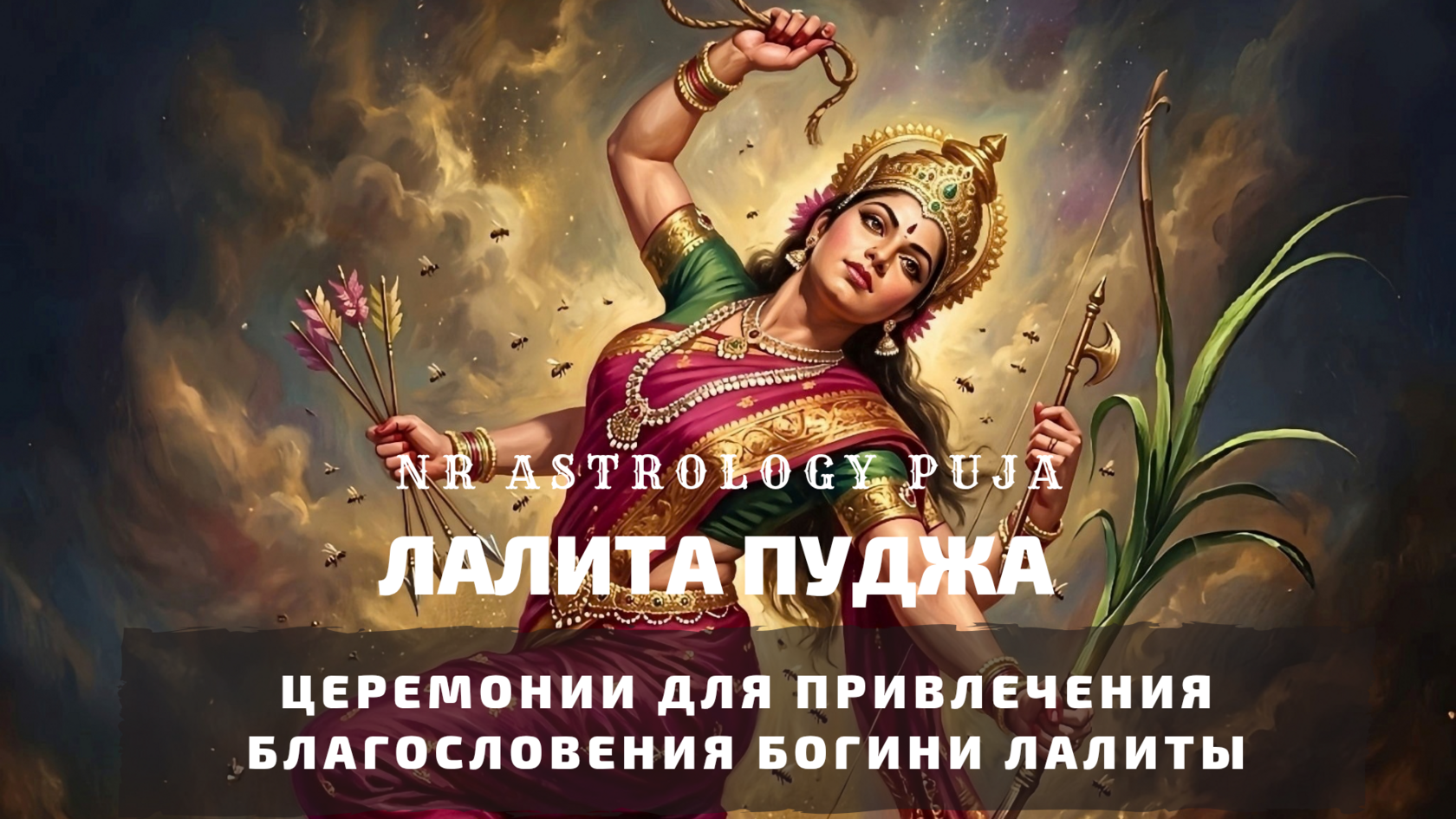
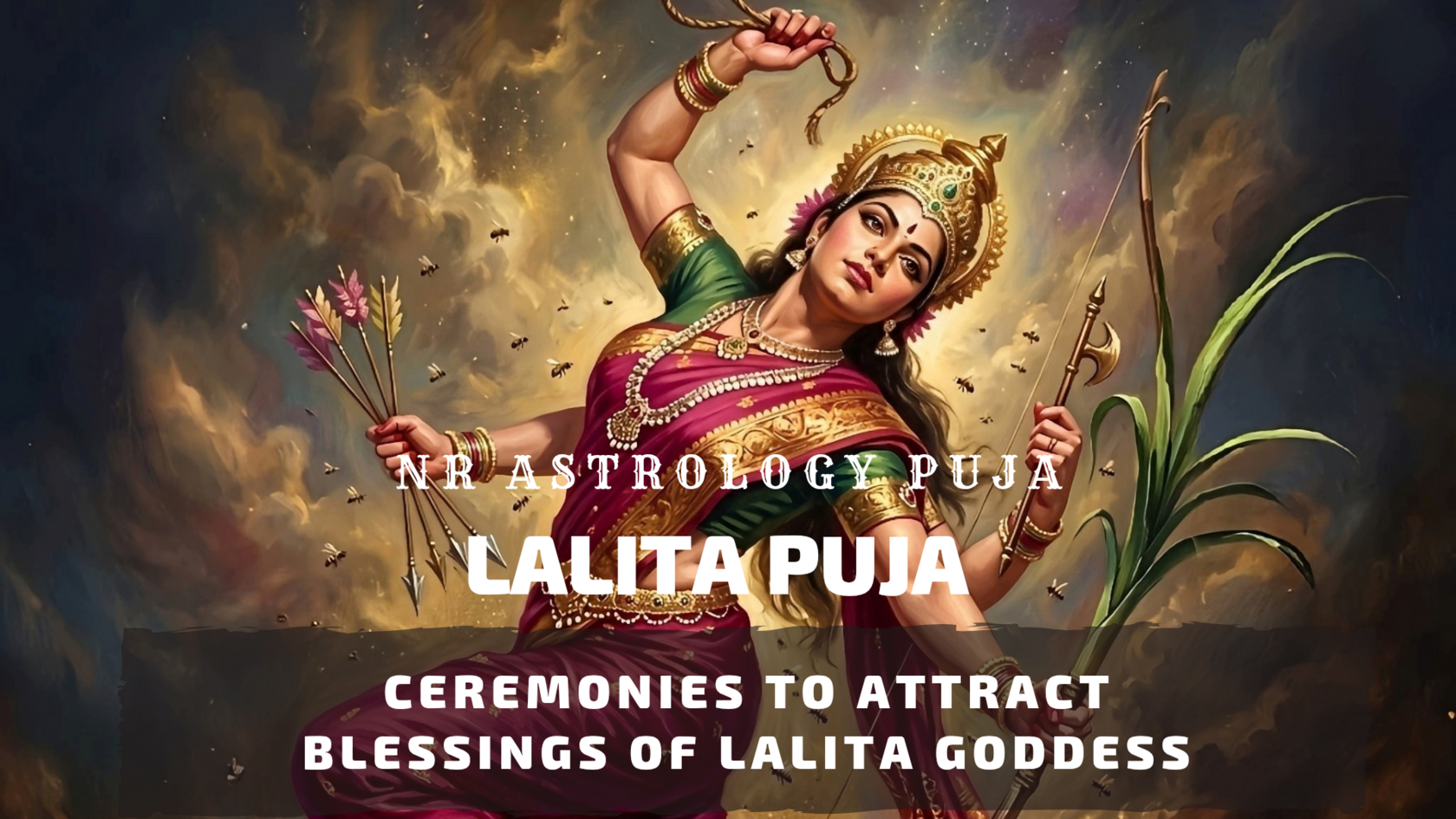
Пуджи Богине ЛалитеPujas to Goddess Lalita
Богиня Лалита или Трипурасундари — это одна из форм Шакти, божественной энергии, в индуизме. Она считается самой прекрасной во всех трёх мирах и верховной царицей вселенной. Она также называется Шодаши, что означает «шестнадцатая», потому что она превосходит ритмы времени и лунных фаз. Она является источником всех сил и знаний, и поэтому почитается как Парашакти, Ади Парашакти или Шарада.Goddess Lalita, or Tripurasundari, is one of the forms of Shakti, the divine energy, in Hinduism. She is considered the most beautiful in all three worlds and the supreme queen of the universe. She is also called Shodashi, meaning "the sixteenth", because she transcends the rhythms of time and the lunar phases. She is the source of all powers and knowledge, and is therefore worshipped as Parashakti, Adi Parashakti or Sharada.
Богиня Лалита объединяет в себе одновременно высшую энергию Шакти и все качества Тридеви (Лакшми, Сарасвати и Кали).Goddess Lalita unites within herself at once the supreme energy of Shakti and all the qualities of the Tridevi (Lakshmi, Saraswati and Kali).
Её благословение дарует семейное благополучие, процветание, защиту от болезней и негативных астрологических периодов.Her blessing grants family well-being, prosperity, protection from illness and from negative astrological periods.
Простое подношение с одним именем. Хороший способ попросить у Богини защиты и благословения, когда хочется начать с малого.A simple offering with a single name: we will pronounce it during the ceremony in India. A good way to ask the Goddess for protection and blessing when you want to start small.
- ✦Лалита ПуджаLalita PujaЦеремония призывания Богини ТрипурасундариA ceremony invoking Goddess Tripurasundari
Полная расширенная пуджа для всей семьи: абхишека Лакшми-Нарасимхи, призывание Дурги и тройное чтение Лалита Кавачи. Оптимальный выбор, чтобы закрыть базовые задачи — здоровье, защиту дома и снятие негатива.A full extended puja for the whole family: a Lakshmi Narasimha abhishekam, the invocation of Durga and three recitations of the Lalita Kavacha. The best choice for the basics — health, protection of the home and the clearing of negativity.
- ✦Расширенная Лалита ПуджаExtended Lalita PujaВся семьяThe whole family
- ✦Лакшми Нарасимха АбхишекамLakshmi Narasimha Abhishekam
- ✦Церемония призывания ДургиDurga invocation ceremony
- ★3 прочтения Лалита Кавачи3 recitations of the Lalita Kavacha
Месяц пудж, отдельные церемонии всем 15 формам Лалиты (Нитья Деви), Пратьянгира и Кали. Для тех, кто работает с серьёзными препятствиями, конфликтами и защитой от враждебных влияний.A month of pujas, separate ceremonies for all 15 forms of Lalita (the Nitya Devis), Pratyangira and Kali. For those working through serious obstacles, conflicts and protection from hostile influences.
- ✦Всё из СтандартногоEverything from Standard
- ✦Лалита Пуджа в течение месяцаLalita Puja over a month
- ★Пуджа 15 формам Лалиты (Нитья Деви)Puja to the 15 forms of Lalita (Nitya Devis)Церемонии каждой из 15 вечных формCeremonies for each of the 15 eternal forms
- ★Пратьянгира ПуджаPratyangira Puja
- ✦Кали ПуджаKali Puja
Огненная хома всем 15 формам Лалиты, пуджа в храме Богини и в храме Лакшми, кормление коров. Самый сильный вариант для процветания, роста и устойчивого результата.A fire homa to all 15 forms of Lalita, a puja in the temple of the Goddess and in the Lakshmi temple, and the feeding of cows. The strongest option for prosperity, growth and lasting results.
- ✦Всё из Стандартного и РасширенногоEverything from Standard and Extended
- ★Хома 15 формам ЛалитыHoma to the 15 forms of LalitaОгненные ритуалы 15 Нитья ДевиFire rituals for the 15 Nitya Devis
- ✦Пуджа в храме БогиниPuja in the temple of the Goddess
- ✦Кормление коровFeeding the cows
- ★Пуджа в храме ЛакшмиPuja in the Lakshmi temple
Хома и 15 пудж формам Лалиты, персональная хома с трансляцией, раздача еды нуждающимся, очистительные церемонии и пожертвования браминам. Для глубокого благословения и работы с судьбой рода.A homa and 15 pujas to the forms of Lalita, a personal homa with live streaming, the distribution of food to those in need, purification ceremonies and donations to the brahmins. For deep blessing and work with the destiny of the family line.
- ✦Всё из предыдущих пакетовEverything from the previous packages
- ★Хома + 15 Пудж формам ЛалитыHoma + 15 Pujas to the forms of Lalita
- ★Индивидуальная Хома с трансляциейIndividual Homa with live streaming
- ✦Раздача еды нуждающимсяDistribution of food to those in need
- ✦Очистительные церемонииPurification ceremonies
- ✦Пожертвования браминамDonations to the brahmins
Целый год покровительства: 15 хом формам Лалиты, хома каждый месяц и ежемесячные фото- и видеоотчёты. Максимальная форма поддержки Богини на длинной дистанции.A whole year of patronage: 15 homas to the forms of Lalita, a homa every month, and monthly photo and video reports. The fullest form of the Goddess's support over the long term.
- ✦Всё из предыдущих пакетовEverything from the previous packages
- ★15 Хом формам Лалиты15 Homas to the forms of Lalita15 огненных церемоний Нитья Деви15 fire ceremonies for the Nitya Devis
- ★Хома раз в месяц (12 мес.)Homa once a month (12 months)
Вопросы о ПуджахQuestions about the Pujas
Высшая форма Божественной Матери. Объединяет качества Лакшми, Сарасвати и Дурги. «Трипурасундари» — «Прекраснейшая в Трёх Мирах».The highest form of the Divine Mother. She unites the qualities of Lakshmi, Saraswati and Durga. "Tripurasundari" means "the most beautiful in the three worlds".
15 вечных форм Лалиты, соответствующие 15 видимым калам Луны. Каждая управляет одним лунным днём. 16-я кала (Садакхья) — это сама Лалита, скрытое неизменное сознание. На Пурниму — полнота Лалиты, на Амавасью — Читра.The 15 eternal forms of Lalita, corresponding to the 15 visible kalas of the Moon. Each governs one lunar day. The 16th kala (Sadakhya) is Lalita herself, the hidden unchanging consciousness. On Purnima — the fullness of Lalita, on Amavasya — Chitra.
В Падма-пуране (5.75.45) Деви прямо говорит: «Я — Лалита-Деви, в мужской форме являющаяся как тело Кришны» (ahaṃ ca lalitā-devī puṃ-rūpā kṛṣṇa-vigrahā). Лалита-сахасранама также прямо называет Деви именами Govinda-rūpiṇī (267), Viṣṇu-rūpiṇī (893), Padmanābha-sahodarī (280). В храме Раджагопаласвами в Маннаргуди эта объединённая форма почитается как Гопаласундари.In the Padma Purana (5.75.45) the Devi says plainly: "I am Lalita Devi, who in masculine form appears as the body of Krishna" (ahaṃ ca lalitā-devī puṃ-rūpā kṛṣṇa-vigrahā). The Lalita Sahasranama also directly names the Devi with the names Govinda-rūpiṇī (267), Viṣṇu-rūpiṇī (893), Padmanābha-sahodarī (280). At the Rajagopalaswami temple in Mannargudi this combined form is worshipped as Gopalasundari.
Нет. Церемонии проводятся браминами в Индии. Во время ритуала произносится ваше имя. Вы получаете отчёт.No. The ceremonies are performed by brahmins in India. Your name is pronounced during the ritual. You receive a report.
Пуджа — обращение к Деви с подношениями. Хома — огненная церемония через Агни. Хома считается более мощной.A Puja is an invocation of the Devi with offerings. A Homa is a fire ceremony through Agni. The Homa is considered more powerful.
Свободное подношение — одно имя. Платные пакеты — имена всех членов семьи.The free offering includes one name. Paid packages include the names of all family members.
В любое время. Особенно мощное — Пурнима, пятницы и Наваратри.At any time. Especially powerful are Purnima, Fridays and Navratri.
Обретите благословение Богини ЛалитыReceive the blessing of Goddess Lalita
Закажите Пуджу для обретения защиты, мудрости, красоты и процветания.Order a Puja to receive protection, wisdom, beauty and prosperity.