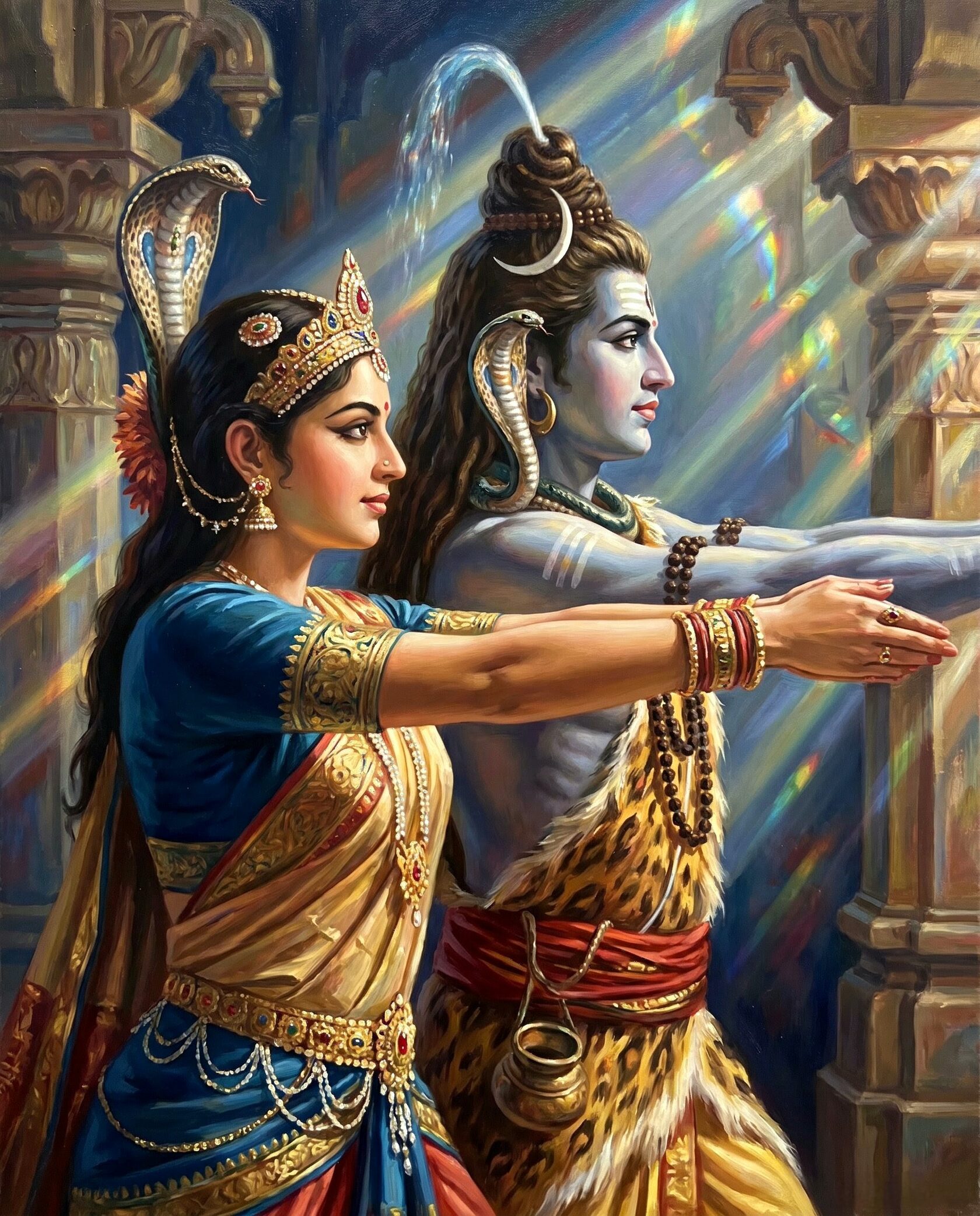
Гаури & Джая Парвати ВратыGauri & Jaya Parvati Vrata
Гаури и Джая Парвати ВратыGauri & Jaya Parvati Vrata
Что такое Гаури и Джая Парвати ВратыWhat is Gauri & Jaya Parvati Vrata
Главное различие между двумя обетами — в том, кто их держит и о чём молится. Джая Парвати Враты чаще соблюдают незамужние девушки, чтобы быстрее обрести свою половинку — достойного супруга. Гаури Враты чаще держат замужние женщины — ради благополучия, здоровья и долгой жизни мужей и мира в семье.The main difference between the two vows lies in who observes them and what they pray for. Jaya Parvati Vrata is more often observed by unmarried girls, to sooner find their other half — a worthy spouse. Gauri Vrata is more often kept by married women — for the wellbeing, health and long life of their husbands and for peace in the family.
Гаури Враты и Джая Парвати Враты — тесно связанные обеты (санскр. «врата» — «обет», «зарок»), посвящённые Богине Парвати, которую в это время почитают под именем Гаури — «Сияюще-светлая», «Прекрасная». Праздник соблюдают преимущественно в Гуджарате и других западных регионах Индии — как незамужние девушки, так и замужние женщины. Незамужние молят Богиню о добром супруге, наделённом качествами Шивы, а замужние — о благополучии мужа, счастье и мире в семье.Gauri Vrata and Jaya Parvati Vrata are two closely connected vows (Sanskrit "vrata" means "vow" or "sacred pledge") dedicated to Goddess Parvati, honoured during this time under the name Gauri — "the radiantly fair," "the beautiful one." The festival is observed mainly in Gujarat and other western parts of India — by both unmarried girls and married women. The unmarried pray to the Goddess for a good husband endowed with the qualities of Shiva, while the married pray for their husband's wellbeing and for happiness and peace in the family.
Оба обета длятся по пять дней в месяц Ашадха (июнь–июль), но начинаются в разные дни. Гаури Враты открываются на одиннадцатый лунный день (Экадаши) растущей луны и завершаются в полнолуние (Пурнима). Джая Парвати Враты начинаются на тринадцатый лунный день (Трайодаши) и завершаются на третий лунный день убывающей луны (Кришна-пакша Трития). Джая Парвати Враты известны также под именами Гаури Враты, Алуна Враты и Моракат Враты. Некоторые женщины дают обет соблюдать их не единожды, а на протяжении пяти, семи, девяти и более лет подряд.Both vows last five days in the month of Ashadha (June–July), but they begin on different days. Gauri Vrata opens on the eleventh lunar day (Ekadashi) of the waxing moon and ends on the full moon (Purnima). Jaya Parvati Vrata begins on the thirteenth lunar day (Trayodashi) and ends on the third lunar day of the waning moon (Krishna-paksha Tritiya). Jaya Parvati Vrata is also known as Gauri Vrata, Aluna Vrata and Morakat Vrata. Some women pledge to observe it not just once, but for five, seven, nine or more consecutive years.
Значение обета Джая Парвати ВратыThe meaning of Jaya Parvati Vrata
Достойный супруг и счастливый бракA worthy spouse and a happy marriage
Для незамужних девушек главный смысл обета — молитва о достойном спутнике жизни, обладающем качествами Шивы: верностью, силой духа, мудростью и добротой. Парвати сама совершала суровые подвижничества, чтобы обрести Шиву в мужья, и потому считается идеальным образцом преданной супруги.For unmarried girls the central meaning of the vow is a prayer for a worthy life partner endowed with the qualities of Shiva: faithfulness, strength of spirit, wisdom and kindness. Parvati herself performed severe austerities to win Shiva as her husband, and so she is regarded as the ideal model of a devoted wife.
Благополучие мужа и защита семьиThe husband's wellbeing and protection of the family
Для замужних женщин обет соблюдается ради долголетия и здоровья супруга, мира и достатка в доме. Согласно Врата-катхе, одна женщина своим обетом и глубокой преданностью вернула к жизни мужа, укушенного змеёй, — так обет стал символом силы супружеской любви, способной хранить и защищать близких.For married women the vow is observed for the longevity and health of the husband and for peace and prosperity in the home. According to the Vrata Katha, a woman, through her vow and deep devotion, brought her snake-bitten husband back to life — so the vow became a symbol of the power of conjugal love, able to preserve and protect one's loved ones.
Очищение и внутренняя дисциплинаPurification and inner discipline
Отказ от соли, специй и определённых продуктов рассматривается не как лишение, а как путь очищения — тела и ума. Простая пища и воздержание помогают сосредоточиться на молитве и служении, укрепляют волю и, как считается, очищают человека «изнутри и снаружи».Abstaining from salt, spices and certain foods is seen not as deprivation but as a path of purification — of body and mind. Simple food and restraint help to focus on prayer and service, strengthen the will and, it is believed, purify a person "from the inside out."
Пробуждение и ночное бдениеVigil and the night watch
В последнюю ночь обета женщины проводят ночное бдение — Джагарану (Джагран), — оставаясь бодрствующими и вознося молитвы, бхаджаны и славословия Богине. Бодрствование в священную ночь символизирует духовную бдительность и готовность сердца хранить свет божественного присутствия.On the final night of the vow the women hold a night vigil — Jagarana (Jagran) — staying awake and offering prayers, bhajans and praises to the Goddess. Keeping watch through the sacred night symbolizes spiritual vigilance and the heart's readiness to guard the light of the divine presence.
Ритуалы обета и Кокила ВратыRituals of the vow and Kokila Vrata
Обет посвящён божественной чете — Шиве и Богине Парвати в её образе Гаури. Имя «Гаури» означает «светлая», «сияющая» и указывает на одну из самых благостных форм Богини. В образе Махагаури — той же Богини, которую почитают на восьмой день Наваратри, — она изображается в белых одеждах, восседающей на белом быке, чистой и умиротворяющей.The vow is dedicated to the divine couple — Shiva and Goddess Parvati in her form of Gauri. The name "Gauri" means "fair," "radiant," and points to one of the most benevolent forms of the Goddess. In the form of Mahagauri — the same Goddess honoured on the eighth day of Navaratri — she is depicted in white garments, seated on a white bull, pure and serene.
Согласно Врата-катхе, супруга-женщина своим обетом и молитвой вернула к жизни мужа, укушенного змеёй в лесу, когда тот собирал цветы для поклонения Шива-лингаму. Тронутый её преданностью, Шива воскресил супруга, и позже чета обрела долгожданного сына. Эта история стала сердцем обета — гимном силе супружеской любви и веры.According to the Vrata Katha, a wife, through her vow and prayer, brought back to life her husband, who had been bitten by a snake in the forest while gathering flowers to worship the Shiva Lingam. Moved by her devotion, Shiva revived the husband, and later the couple was blessed with a long-awaited son. This story became the heart of the vow — a hymn to the power of conjugal love and faith.
Джая Парвати Врата-катхаJaya Parvati Vrata KathaРостки джавара, Джагарана и завершениеJavara sprouts, Jagarana and the conclusion
В первый день в горшочке высаживают пшеничные зёрна (джавара) и ставят у домашнего алтаря; все дни ростки поливают и почитают, а рядом кладут «наглу» — украшение из хлопковой ваты, окрашенное киноварью. Совершают пуджу Шиве и Парвати с подношениями куркумы, кумкума, цветов, риса-акшаты, кокоса и плодов. В последнюю ночь — Джагарана. На следующее утро ростки опускают в воды реки или высаживают в саду, а обет завершают полной трапезой с солью, лепёшками из пшеницы и овощами.On the first day wheat seeds (javara) are planted in a small pot placed by the home altar; for all the days the sprouts are watered and honoured, and beside them is laid a "nagla" — an ornament of cotton wool coloured with vermilion. A puja is performed to Shiva and Parvati with offerings of turmeric, kumkum, flowers, akshata rice, coconut and fruits. On the final night comes Jagarana. The next morning the sprouts are immersed in the waters of a river or planted in the garden, and the vow is concluded with a full meal of salt, wheat flatbreads and vegetables.
Кокила Враты — обет в полнолуние АшадхиKokila Vrata — the vow of the Ashadha full moon
В тот же период, в полнолуние месяца Ашадха (Ашадха Пурнима), соблюдаются Кокила Враты — обет, посвящённый Богине Сати (Парвати), которую почитают в образе кукушки (санскр. «кокила»). По преданию, Сати, оставившая тело после того, как её отец оскорбил Шиву, провела множество небесных лет в облике кукушки, прежде чем вновь родилась как Парвати и воссоединилась с Шивой. Женщины соблюдают этот обет ради супружеского счастья и долгой семейной жизни, поклоняясь образу кукушки и вознося молитвы Шиве и Парвати. Полнолуние Ашадхи совпадает с Гуру ПурнимойGuru Purnima — священным днём почитания духовного учителя, что придаёт этому времени особую благодатную силу.During the same period, on the full moon of the month of Ashadha (Ashadha Purnima), Kokila Vrata is observed — a vow dedicated to Goddess Sati (Parvati), venerated in the form of a cuckoo (Sanskrit "kokila"). According to legend, Sati, who left her body after her father insulted Shiva, spent many celestial years in the form of a cuckoo before being reborn as Parvati and reunited with Shiva. Women observe this vow for marital happiness and a long family life, worshipping the image of the cuckoo and offering prayers to Shiva and Parvati. The Ashadha full moon coincides with Guru PurnimaGuru Purnima — the sacred day of honouring the spiritual teacher, which lends this time a special blessed power.
Календарь Гаури и Джая Парвати ВратGauri & Jaya Parvati Vrata Calendar
Заказать церемонии на Джая Парвати ВратыOrder ceremonies for Jaya Parvati Vrata
- Санкальпа с вашим именем в один из дней вратаSankalpa with your name on one of the vow days
- Общая пуджа Гаури-ПарватиCollective Gauri-Parvati puja
- Пуджа Гаури-Парвати в ключевой деньGauri-Parvati puja on a key day
- Свайямвара Парвати Пуджа (для брака)Swayamvara Parvati puja (for marriage)
- Пуджа устранения препятствийObstacle-removing puja
- Индивидуальный отчёт (до 5 имён)Individual report (up to 5 names)
- Всё из пакета СтандартныйEverything in the Standard package
- Пуджа во все 5 дней ВратPuja on all 5 vow days
- Уму-Махешвара Пуджа (Шива и Парвати)Uma-Maheshwara puja (Shiva & Parvati)
- Джагарана — ночное почитаниеJagarana — night vigil
- Церемония в храме БогиниCeremony at a temple of the Goddess
- Всё из Стандартного и РасширенногоEverything in Standard & Extended
- Церемонии в 3 храмах БогиниCeremonies at 3 temples of the Goddess
- Аннадана — раздача еды в ИндииAnnadana — food distribution in India
- Дакшина браминамDakshina to the brahmins
- Индивидуальная Хома Гаури-ПарватиIndividual Gauri-Parvati Homa
- Всё из пакета ПремиумEverything in the Premium package
- Трипура Сундари ПуджаTripura Sundari puja
- Шива-Парвати АбхишекамShiva-Parvati Abhishekam
- Мангала Гаури Пуджа (для брака)Mangala Gauri puja (for marriage)
- Церемонии в 5 храмах БогиниCeremonies at 5 temples of the Goddess
- Всё из пакета ЗолотойEverything in the Gold package
- Полный обряд всех 5 дней Джая ПарватиFull rite of all 5 Jaya Parvati days
- Кокила Врата Пуджа на Ашадха ПурнимуKokila Vrata puja on Ashadha Purnima
- Свадеша Гаури Хома и Рудра АбхишекаExtended Gauri Homa and Rudra Abhishekam
- Аннадана и дакшина в нескольких храмахAnnadana and dakshina at several temples
- Персональное сопровождение и отчётыPersonal support and reports